
If your car breaks down, the safest plan depends heavily on where it happens. On highways, your biggest threat is high-speed traffic and a narrow shoulder, so the priority is maximizing space and visibility while keeping people out of the danger zone. On city streets, the bigger risks are getting rear-ended in stop-and-go traffic, blocking a lane, or ending up stranded in a poorly lit spot, so the priority is getting out of the flow of traffic quickly without creating a new hazard. If you’re in the Orlando area and need help getting unstuck, Nimble Towing Service can send roadside assistance 24/7, and you can reach them at (407) 357-0777.
Start signaling early and make your movements predictable. Put your hazards on as soon as you know you need to pull over, then slow down smoothly and begin scanning for a spot that gives you room to work with. Abrupt braking and last-second swerves are when secondary crashes happen, especially when drivers behind you are distracted.
As you come to a stop, think about what happens if another vehicle clips yours. If you can, stop with your wheels turned slightly away from traffic so the car is less likely to be pushed back into the lane on impact. Set the parking brake once you’re in position, and keep your seatbelt on while you decide your next move.
That next move is a quick “stay or exit” decision. If you’re on a high-speed roadway with a decent shoulder and you can remain belted inside a stable vehicle, staying inside is often safer than standing near moving traffic. If you’re in an active lane, on a blind curve, or in a spot where the vehicle itself is likely to be struck, getting out and moving to a protected location may be the safer choice. Your goal is simple: put something solid between people and traffic, or create enough distance that a glancing hit doesn’t reach you.
On a highway, even a minor breakdown can turn dangerous quickly because closing speeds are high and shoulders are unpredictable. The safest highway breakdown is the one where you’re completely out of the traffic stream, visible from far away, and waiting in a place that a drifting vehicle is less likely to reach.
If the car can still roll, an exit ramp that leads you off the main lanes is often the best outcome. A nearby parking lot or wide shoulder beyond an exit is better than stopping immediately beside fast traffic. Wide paved shoulders are next, especially if there’s a guardrail and enough room to keep the vehicle well away from the white line.
Be cautious around “gore” areas, the striped zones where ramps split. They look wide, but drivers cut across them, and disabled vehicles there are often struck. Very narrow shoulders, bridges with little to no shoulder, and blind curves are among the riskiest places to be stopped. If you realize the shoulder is disappearing, it can be safer to continue slowly with hazards on until you reach a wider section, provided the vehicle isn’t actively failing in a way that makes it unsafe to move.
When there is no shoulder at all, focus on being predictable and visible. Hazards on, stay as far right as possible, and call for help immediately with your exact location. If the vehicle is losing power and you can’t maintain control, prioritize stopping without putting the car sideways across a lane.
Visibility is your main defense against being hit. Hazards are step one, but lighting and contrast matter too. At night, keep your lights on if it helps approaching drivers see the outline of your vehicle, but avoid doing anything that blinds people or makes it harder to judge distance.
Reflective warning triangles can help when placed correctly, and they’re generally safer than road flares for most drivers. Triangles should be positioned to give approaching traffic as much warning as possible without putting you in harm’s way to place them. If stepping into the shoulder area to deploy a device feels unsafe, skip it. A triangle doesn’t help if you get injured setting it down.
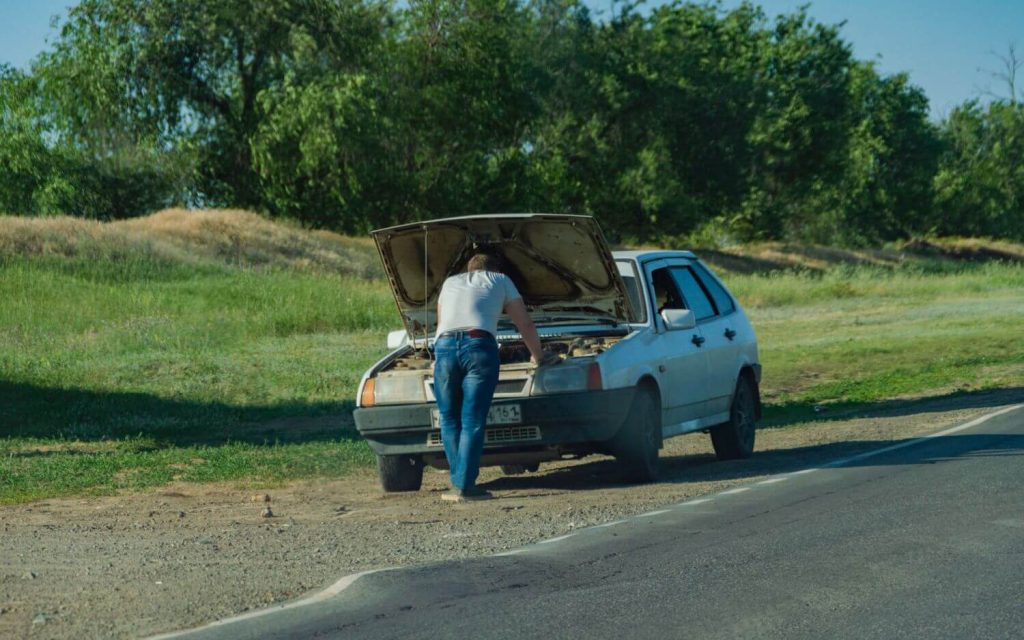
People often ask about popping the hood. Raising the hood can make a disabled vehicle more noticeable and signals that you’re not just parked. It can also be risky if you have to stand close to traffic to do it, or if wind makes it unstable. If you’re on a narrow shoulder, your body positioning matters more than whether the hood is up.
Where you wait should be based on what can happen if the vehicle is struck. If there’s a wide shoulder, good visibility, and you can remain inside belted with doors closed, staying in the vehicle is frequently the least risky option. Standing next to the car, even on the shoulder, is one of the most dangerous choices because you’re exposed and drivers drift.
If there is a guardrail and a safe way to get behind it without crossing into traffic, behind the guardrail can be safer than sitting in a car that might be hit from behind. The key is avoiding the area directly in front of or behind your vehicle, which is where impacts often push debris and metal. If you move behind a barrier, bring passengers with you, keep them together, and do not allow kids or pets to wander. A leash and a firm plan for where everyone stands can prevent a stressful situation from turning into a chase near traffic.
On highways, “I’m near Orlando” or “I’m by the parks” isn’t actionable. Roadside teams need direction of travel and a precise reference point. Mile markers, exit numbers, and the name of the highway are ideal. If you can share a GPS pin from your phone, do it, but also describe what side you’re on and what you can see. “Eastbound, just past Exit 75, on the right shoulder” is far more useful than a general neighborhood name.
Also mention anything that changes the risk level, like being on a bridge, on a curve, or partially in a lane. That detail helps responders plan how to position their vehicle and what equipment may be needed to keep the scene safe.
In town, you’re dealing with lower speeds but more conflict points: intersections, turning lanes, pedestrians, cyclists, and drivers who assume you’ll move when the light changes. The safest city breakdown is the one where your vehicle isn’t blocking a lane and isn’t sitting where someone will hit it because they weren’t paying attention.
If the vehicle is drivable enough to creep, use that momentum to get into a parking lot, side street, or driveway. Getting fully out of the travel lane is usually better than stopping at the curb in a tight lane where cars have to squeeze around you. Turn signals still matter even in a breakdown situation. A clear signal reduces the chances someone tries to pass you on the wrong side.
Intersections deserve extra caution. A car stopped at a green light can cause sudden braking behind you, and a car stopped at a red light may get hit by someone who assumes traffic will flow. If you stall in or near an intersection, your priority is moving yourself and passengers to a safer position and getting assistance quickly. Avoid blocking bike lanes and bus lanes when possible, not because of etiquette, but because those lanes create unexpected passing behavior when they’re blocked.
Rain and glare make city streets deceptively hazardous. Drivers can miss a stopped car until they’re close, especially if streetlights reflect off wet pavement. If you can choose where you stop, favor a spot that is well-lit and gives approaching drivers a long sight line. A parking lot entrance or a wide shoulder near a commercial area can be safer than a dark residential street with tight lanes and parked cars.
Be careful with where you stand if you exit the vehicle. People naturally step into the “protected” space near the curb, but puddles, broken glass, and slick painted lines can cause slips. Staying upright and visible is part of staying safe.
In city settings, some drivers will try to squeeze by, honk, or get too close. Keep your doors closed unless you are actively exiting, and avoid stepping into the lane to wave people around. If someone approaches your vehicle and you feel unsafe, trust that instinct. Keep windows up, call for help, and if needed contact law enforcement, especially if you’re blocking traffic in a way that could trigger road rage or create a crash risk.
If you’re stopped in an active lane, the priorities tighten up: warn traffic as much as you safely can, get people out of the impact zone, then worry about the vehicle. Hazards go on immediately, and if there’s any ability to move the car even a few feet to the right, that can reduce risk dramatically.
Exiting the vehicle in a live lane is dangerous, but staying inside a vehicle that may be hit at speed is also dangerous. The safest choice depends on how exposed you are and whether you can reach a protected area. If you must get out, do it on the side away from traffic if possible, and move to a place that a skidding vehicle is less likely to reach. On highways, that often means behind a guardrail. In a city, it might mean a sidewalk, a shoulder, or a parking lot entrance.
Pushing a vehicle sounds practical, but it’s frequently riskier than people think. You’re exposed, your attention is divided, and other drivers may not understand what you’re doing until they’re too close. If you can’t move the vehicle with control from the driver’s seat, it may be safer to wait for professional assistance that can position a service vehicle to shield the scene.
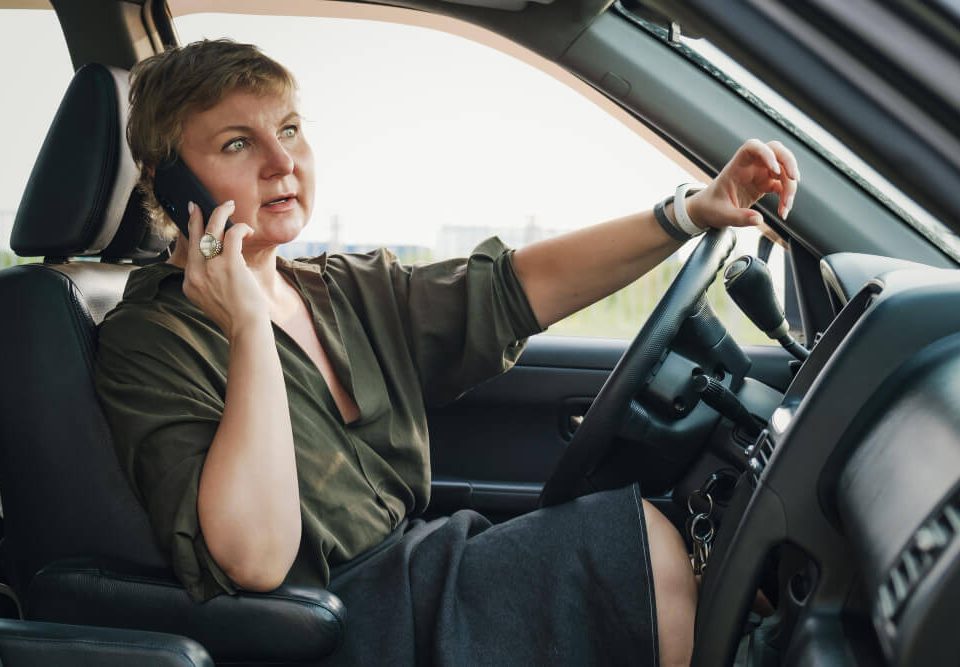
A good roadside call saves time and prevents unsafe back-and-forth. Share your exact location, direction of travel, and what makes the scene hazardous. If your car is on a narrow shoulder, in a live lane, or on a curve, say that first.
Then describe what the vehicle can do. Is it drivable at low speed, completely dead, or making noise or smoke? Mention any leaks you can see, especially if fluid is pooling. If you have passengers, pets, or anyone with mobility needs, say so, because it changes how responders approach the stop and where they may ask you to wait.
Finally, share identifying details that help the right truck find you quickly: vehicle color, make, and a landmark. “Silver SUV on the right shoulder, just past the overpass” is more useful than repeating the same cross street three times.
When help arrives, the safest thing you can do is follow the technician’s directions and stay where they tell you to wait. Their first job is often positioning their vehicle to protect the scene, and that may mean moving around you, setting cones, or asking you to adjust your steering position.
Give them room to work and avoid hovering near the shoulder edge. Even when you’re eager to help, standing too close creates distractions and increases the risk you’ll be struck by a passing mirror or a sudden lane drift. If you need to retrieve something from the vehicle, tell the technician so they can time it safely.
Lighting choices can matter. Headlights aimed toward the service vehicle can reduce visibility for the technician, while hazards generally help approaching traffic notice the scene. If the technician asks you to change what lights are on, do it. They’re optimizing the scene for safety based on what they’re seeing in real time.
A few items can make a stressful situation much safer without turning your trunk into a garage. A reflective vest is one of the highest-value additions because it makes you visible in low light. Reflective warning triangles are useful when you can deploy them without stepping into danger. A flashlight or headlamp helps you see where you’re walking and helps others see you.
Add practical items that keep you from making risky decisions, like a phone charger or power bank so you can keep communicating, and a light rain jacket so you aren’t tempted to stand in a lane under an umbrella that blocks your peripheral vision.
Be cautious with anything that introduces fire or unstable lifting. Cheap flares can be dangerous around fuel leaks, and jacks used on soft shoulders can slip. A safety kit should reduce risk, not add a new one.
Sometimes the safest outcome is getting the vehicle moved rather than trying to make it roadworthy on the shoulder. If the car keeps dying, won’t restart reliably, is overheating, has warning lights that suggest a serious drivetrain issue, or is leaking fluid, driving away can turn a minor inconvenience into a major repair or a breakdown in an even worse location.
The tow decision also depends on where you are. A car that might limp home from a quiet neighborhood is a different situation on a highway shoulder at night. If the vehicle can’t be made safe quickly, moving it to a secure location where it can be repaired is often the smarter, safer choice.
If you need help making that call in the moment, Nimble Towing Service handles roadside assistance and towing around Orlando, and you can reach their team at (407) 357-0777. Getting the right type of help quickly keeps a breakdown from turning into a secondary crash.
Highway breakdowns are about space, visibility, and keeping people out of the shoulder danger zone, while city street breakdowns are about getting out of traffic flow and avoiding rear-end crashes near intersections and tight lanes. In both settings, predictable signaling, accurate location details, and smart decisions about where people wait do more to prevent injuries than any single gadget. If you’re stuck and need roadside assistance in Orlando, Nimble Towing Service can help you get safe and moving again at (407) 357-0777.