
When you need towing an electric car long distance, the big concern is avoiding damage. Many EVs can’t be towed the same way as gas cars, and the wrong method can create drivetrain problems or even affect the high-voltage system. This article explains the safest towing options, what to do before the truck arrives, and what details matter most when you’re arranging a long-distance tow. If you’re in the Orlando area and need help moving an EV, Nimble Towing Service is a practical contact at (407) 357-0777.
Yes, it can be safe, but method matters. The key difference is that many electric vehicles have drive units and systems designed to operate under specific conditions. When the car is “off,” you may not have normal lubrication, cooling, or system control that would exist while driving. Some EVs can also regenerate energy when the wheels spin, which sounds helpful but can be problematic if the vehicle is not in the correct mode.
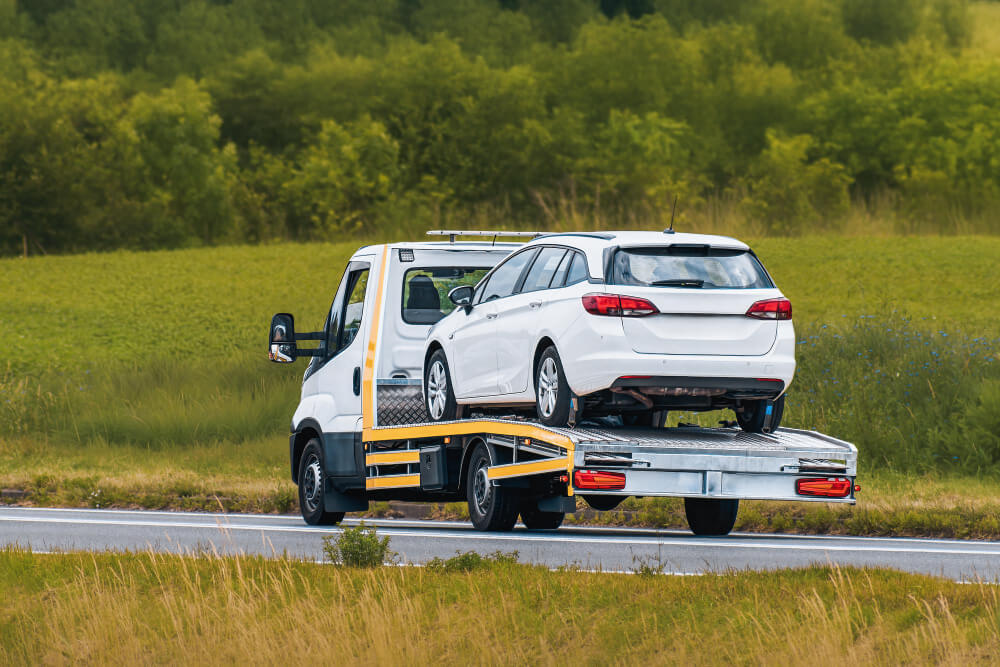
Because of those differences, the safest default for long-distance transport is usually a flatbed where all four wheels are off the ground. That approach reduces the chances of spinning drive wheels, fighting the parking brake, or running into model-specific restrictions.
A good rule of thumb: if you are not 100% sure what your EV allows, treat it as a flatbed situation and verify in the owner’s manual when possible.
For many EVs, a flatbed is the simplest and lowest-risk method, especially for long distance. With the vehicle fully supported, you avoid rolling any wheels on the road and minimize the risk of drivetrain or motor-related issues. It also helps if the car is low on battery, can’t be placed in neutral, or has a wheel that won’t roll.
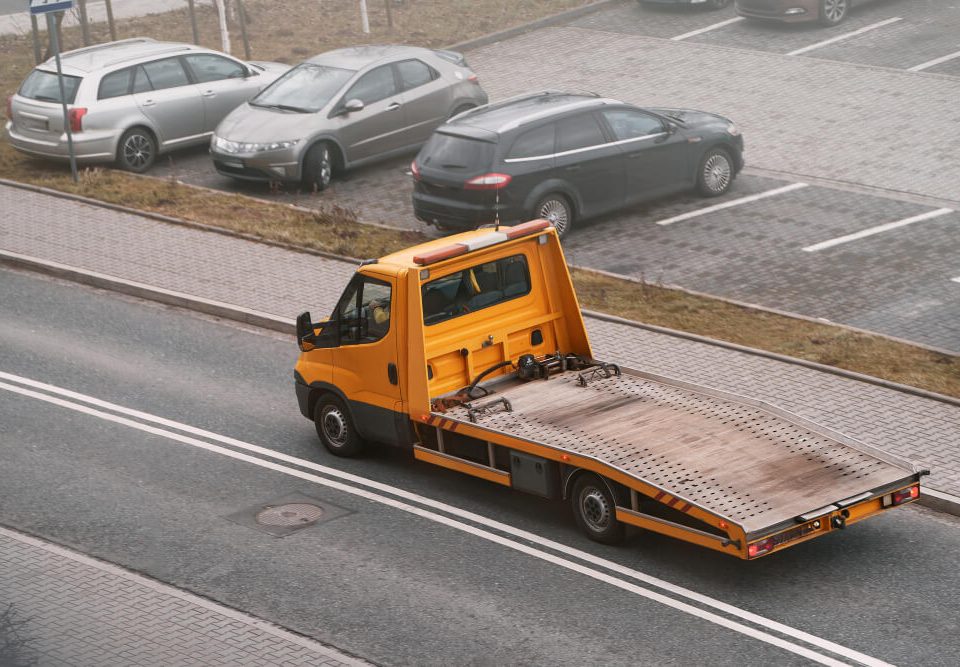
Flatbed transport is also useful when the car is in a parking garage, a tight lot, or needs to be carefully winched due to a steep approach angle.
A tow dolly lifts two wheels off the ground, leaving two wheels rolling. A wheel-lift tow truck does something similar by lifting one end of the vehicle. Whether either method is acceptable depends on the EV’s drivetrain layout and the manufacturer’s towing guidance.
If the rolling wheels are connected to the drive unit, the risk goes up. Even on vehicles where it’s technically permitted for short distances at low speeds, long-distance towing can amplify heat buildup and mechanical stress. Some cars also require specific settings like a transport mode to prevent parking brake re-engagement or steering issues.
Because EV designs vary so much, it’s smart to avoid assumptions like “front-wheel drive means it’s fine.” Many EVs don’t fit the old gas-car rules.
Two common problems show up when an EV is towed with wheels on the ground.
First, the vehicle may not truly be in a free-rolling state. If the parking brake auto-applies, or the car shifts out of neutral, you can end up dragging tires or stressing components.
Second, spinning the wheels may interact with the electric motor and power electronics in ways the vehicle was not designed to handle while powered down. Even if nothing fails immediately, it can create the kind of damage that is expensive and frustrating to diagnose later.
If you’re broken down on the road, safety comes first. Move to a safe spot if you can, turn on hazards, and stay aware of traffic. Then shift your attention to making the tow go smoothly.
If your EV is still “awake” enough to use controls, check whether you can place it into neutral, tow mode, or transport mode. The exact name varies by brand, and some vehicles require a specific sequence, like pressing the brake, selecting neutral, then confirming on the screen. If you can safely access the owner’s manual on your phone, it’s worth a quick search for “towing” or “transport mode.”
Battery state matters too. A high-voltage battery that is very low can cause the car to behave differently, and a weak 12-volt battery can prevent shifting into neutral even if the main traction battery has charge. If the car is fully dead electrically, tell the dispatcher up front, because it may change the plan for loading.
The goal is to keep the EV from fighting the tow. In many models, “neutral” is not enough by itself, because the car may time out and reapply the parking brake. That’s why some manufacturers provide a tow mode or transport mode that keeps the vehicle in a safe state for loading and movement.
Also check for features like Auto Hold, brake hold, or an electronic parking brake. If those are engaged, the car may not roll when the driver tries to winch it. Some EVs also have “creep” settings and driver-assist features that can behave unexpectedly if the car is partially powered.
If you have your key fob, keep it accessible. Some vehicles require the key to remain in the car to stay in neutral, while others require it to be removed. Since that varies, the safest approach is to follow the owner’s manual instructions when you can, and communicate clearly to the tow operator what the car is doing. If the 12-volt system is weak, mention it, since it often controls the shifter lock, parking brake, and steering lock behaviors.
A long-distance tow is not the moment for guesswork around lifting points. EVs commonly have battery packs mounted in the floor area, and improper lifting can damage underbody components. You don’t need to tell a tow operator how to do their job, but it’s reasonable to ask whether they have the correct lift points identified and to mention that it’s an EV with an underfloor battery.
Low ground clearance is another common issue. Many EVs are heavy and sit low, and steep ramps can cause scraping. If your EV is lowered, has aftermarket bodywork, or has a damaged bumper, say so. The tow operator may use different ramp angles, boards, or winch technique to load it more smoothly.
For tie-downs, the safest general approach is securing the vehicle in a way that doesn’t stress suspension or underbody panels. Many operators use wheel nets or straps around the tires. If you see a strap contacting a sensitive panel or cable area, it’s fair to speak up calmly. Good communication prevents damage and delays.
If your EV has been in an accident, long-distance towing often becomes more complicated. A damaged suspension can prevent a wheel from rolling straight, and body damage can make loading angles worse. In these cases, a flatbed and a winch are often needed, because the vehicle may not drive or roll normally.
Sometimes an EV will not go into neutral at all. That can happen if the 12-volt battery is dead, a safety system is triggered, or the vehicle detects a fault and refuses. If a wheel is locked, you may need a different recovery approach, such as skates or specialized handling. The right method depends on the vehicle and what’s damaged, so give the dispatcher accurate details instead of guessing.
If steering is disabled or locked, it can be risky to pull the vehicle without control. That is another reason flatbed loading is commonly preferred for EVs that are not fully functional.
Long-distance towing isn’t just about getting the vehicle on the truck. It’s also about drop-off logistics.
If the destination is a repair facility, confirm that they can accept an EV after hours, and ask where the driver should place the vehicle. If you’re dropping it at home or a storage location, confirm gate access, parking clearance, and whether there’s a safe place to unload a flatbed.
Think about charging access too. If the car arrives with a low battery, you may need a plan to charge it soon after drop-off. That might mean having a charging cable available, confirming the charging equipment works, or arranging the drop in a spot where the vehicle can be moved easily later.
Before the tow, remove valuables and anything loose that could slide around. If you need to leave the key with the vehicle, clarify how that handoff will happen.
For towing an electric car long distance, the most helpful details are the make and model, whether it’s AWD or RWD, whether it can go into neutral or transport mode, and whether the battery is low or the car is completely dead. Mention if it’s in a garage, is low clearance, has wheel damage, or is stuck in a tight spot.
If you have warning messages on the dash related to braking, steering, or a system fault, share that too. You don’t have to decode it. Just describe what you see and what the car will or won’t do.
If the issue is intermittent, you might be tempted to limp an EV to a shop. Sometimes that works, but if the vehicle is throwing serious warnings, won’t stay in the right mode, or is losing power, long-distance towing can be the calmer and safer path. It also avoids the stress of stopping repeatedly and worrying about getting stranded again.
This is a natural point to link internally to your long distance towing service page, since readers are often deciding between driving, charging, or transporting the vehicle.
Towing an electric car long distance is mainly about using the right method and the right settings. When you can, verify your EV’s towing guidance, aim for a flatbed if there’s any uncertainty, and share clear details about neutral or transport mode, battery status, and any damage. Those steps reduce the risk of drivetrain problems and make the tow faster and smoother.
If you need help moving an EV in or around Orlando, you can reach Nimble Towing Service at (407) 357-0777. We can help you choose a safe approach for your vehicle and get it where it needs to go.