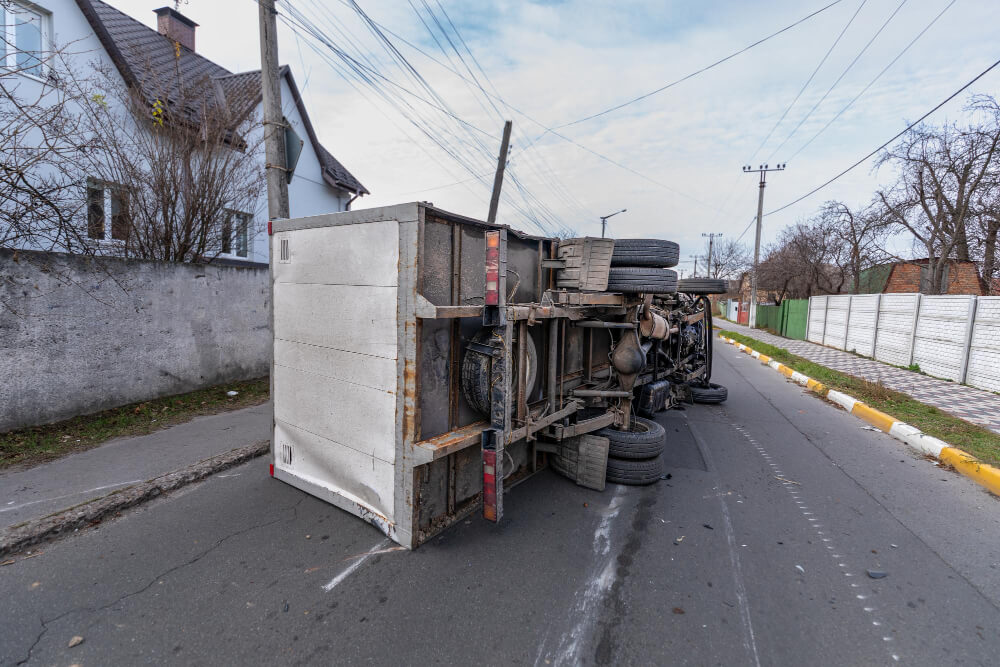


As professional truckers know, the weight and dynamics of a Class 8 vehicle make rollovers one of the most challenging situations on the road. When your rig ends up on its side, every decision matters – not just for getting back on schedule, but for safety and equipment preservation. At Nimble Towing Service Orlando, we’ve handled countless commercial vehicle recoveries, and we’re sharing our expertise to help you navigate these critical situations. If you’re facing a rollover emergency right now, reach our recovery team at (407) 357-0777. Let’s dive into what every professional driver needs to know about semi-truck rollover recovery.
The first 60 minutes following a semi-truck rollover can make or break a recovery operation. Your immediate actions set the stage for everything that follows. First, focus on your personal safety. Even if you feel fine, stay still for a moment and assess yourself for injuries, particularly in your neck and back. If you’re wearing a seatbelt, don’t rush to remove it until you’re sure about potential injuries.
Next, assess your immediate environment. The distinct smell of diesel or visible fluids could indicate dangerous leaks. If you’re carrying hazardous materials, check your manifest and be ready to relay this information to emergency responders. This knowledge is crucial for everyone’s safety.
Once you’ve confirmed your safety, your next priority is preventing secondary incidents. If possible, engage your parking brake system to stabilize the vehicle. Your visibility to other drivers becomes crucial now – activate your four-way flashers immediately. Emergency triangles should be placed strategically at different distances to give approaching traffic plenty of warning. In low-light conditions, LED flares provide additional security.
The type of cargo you’re carrying significantly impacts recovery procedures. Dry van contents might need transfer to prevent further damage, while tanker loads require specialized approaches due to potential liquid surge. Flatbed cargo presents unique challenges, often needing securing or removal before recovery can begin.
Load shift is another critical factor. During a rollover, cargo rarely stays in place. The recovery team needs to understand how the load has moved and whether it’s still secured. This information helps determine if specialized containment equipment is necessary and influences the recovery strategy.
Modern semi-truck recovery requires sophisticated equipment and techniques. A 50-ton rotator crane might be necessary for precision lifting, while multiple heavy-duty winching units ensure controlled movement. Air cushion recovery systems can provide additional support and stability during the operation.
The recovery process itself is a carefully choreographed operation. Multiple-point lifting ensures even distribution of forces, preventing further damage to your vehicle. Load transfer procedures might be necessary, and specialized rigging techniques help maintain control throughout the recovery. Among the various situations that require heavy-duty towing in Orlando, rollover recovery demands some of the most sophisticated equipment and techniques.
During recovery, protecting your truck’s mechanical systems becomes crucial. The drivetrain is particularly vulnerable – often requiring driveshaft removal to prevent damage. Transmission protection measures and proper axle securing help preserve these expensive components.
The cab and frame need careful assessment too. Look for signs of frame rail deformation, cab mount damage, or fifth wheel issues. Air system components are especially susceptible to damage during rollovers and require thorough inspection.
Environmental protection isn’t just good practice – it’s legally required. Any fluid leaks, whether diesel, engine oil, coolant, or hydraulic fluid, need immediate containment. Professional recovery teams come prepared with containment equipment and know how to minimize environmental impact.
Ground protection is equally important. The recovery site’s soil stability affects the operation’s safety and success. Ground protection mats and environmental barriers help prevent both equipment damage and environmental contamination.
Proper documentation protects everyone involved. Take detailed photos from multiple angles before recovery begins. Record weather and road conditions, and maintain a timeline of the recovery operation. This documentation proves invaluable for insurance claims and potential legal issues.
DOT regulations require specific incident reporting procedures. Environmental compliance documentation needs completion, and your insurance carrier will have their own requirements. Keep track of everything – it matters more than you might think.
After recovery, your truck needs thorough inspection before returning to service. The brake system, steering components, and suspension all require careful evaluation. Frame alignment verification ensures your truck is still roadworthy. Safety systems, including ABS, lighting, and air systems, need testing and verification.
Experience teaches us that prevention starts with awareness. Understanding load distribution and managing high centers of gravity can help prevent rollovers. Weather conditions demand special attention – wind speeds, rain effects, and road surface conditions all influence stability.
The landscape of semi-truck recovery has transformed dramatically with technological advancements. Modern recovery operations now integrate sophisticated digital systems that enhance both safety and efficiency. These aren’t just fancy gadgets – they’re tools that make a real difference in complex recovery situations.
Digital monitoring systems have become the backbone of professional recovery operations. These systems provide real-time data that helps recovery teams make precise decisions. Load cell systems continuously monitor weight distribution throughout the recovery process, helping prevent secondary damage to your vehicle. Digital inclinometers work alongside these systems, providing constant feedback about lifting angles and stability factors. This technology allows recovery teams to adjust their approach instantly if conditions change.
Thermal imaging has revolutionized structural assessment during recovery operations. These advanced cameras detect stress points and potential weaknesses that aren’t visible to the naked eye. By identifying these issues early, recovery teams can adapt their strategies to prevent further damage to your vehicle.
Before any physical recovery work begins, modern teams employ sophisticated assessment tools. Drone technology has become particularly valuable, offering aerial views of accident scenes that were impossible to obtain just a few years ago. These birds-eye perspectives help teams plan their approach more effectively, especially in challenging terrain or tight spaces.
3D scanning technology creates detailed digital models of the accident scene. These models help teams identify the best lifting points and potential obstacles before moving any equipment into place. This preparation significantly reduces the risk of complications during the actual recovery process.
Effective communication during a recovery operation involves multiple layers of coordination. Recovery team leaders need clear, constant communication with their ground crews, while also maintaining contact with fleet management, emergency services, and other stakeholders.
A structured communication chain helps prevent confusion and delays. The primary recovery coordinator serves as the central point of contact, managing information flow between all parties. This coordinator ensures that everyone from the ground crew to company management stays informed about progress and any challenges that arise.
High-profile recoveries often attract attention from various sources. Media representatives may arrive at the scene seeking information. While transparency is important, it’s crucial to manage these interactions professionally. All communication should flow through designated channels to ensure accuracy and consistency in messaging.
Florida’s unique climate presents specific challenges for semi-truck recovery operations. During summer months, extreme heat affects both equipment and recovery procedures. Asphalt temperatures can soar well above air temperature, potentially affecting equipment stability and performance. Recovery teams must carefully monitor hydraulic system temperatures and maintain proper cooling protocols to prevent equipment failure.
The state’s frequent thunderstorms create another layer of complexity. Wet conditions can dramatically change soil stability and friction coefficients. Recovery teams must constantly assess ground conditions and adjust their techniques accordingly. Sometimes, this means bringing in additional equipment or modifying the recovery plan to account for unstable surfaces.
Darkness adds another dimension to recovery challenges. Modern LED lighting systems help illuminate work areas, but shadows can still complicate precise operations. Recovery teams use specialized lighting configurations to eliminate blind spots and ensure safe working conditions throughout nighttime operations.
The world of commercial trucking presents unique challenges, and rollover situations test both equipment and expertise. Understanding these recovery procedures isn’t just about knowing what to do after an incident – it’s about being prepared for any situation that might arise. From the critical first hour through the completion of recovery operations, each step requires careful attention and professional expertise.
At Nimble Towing Service Orlando, we’ve seen firsthand how proper preparation and quick response can make a significant difference in recovery outcomes. Our team combines years of experience with cutting-edge technology to provide the safest, most efficient recovery services possible. We’re available 24/7 at (407) 357-0777, ready to respond to any semi-truck rollover situation in the Orlando area.